Turkish peshtemal manufacturers hold an unmatched leadership position in the global home textile industry. Their dominance is not accidental—it is the result of centuries-old weaving culture, superior material quality, modernized production facilities, export-ready capabilities, and deep expertise in private label manufacturing. Today, businesses from around the world prefer working with producers in Turkey because the combination of craftsmanship and industrial strength is nearly impossible to find elsewhere.
In this in-depth guide, we explore why Turkish peshtemal manufacturers lead the global market, what makes their products so desirable, and how they have become one of the most trusted suppliers in international B2B textile trade.

1. Centuries of Weaving Tradition: The Roots of Peshtemal Excellence
Peshtemal originates from ancient Turkish hammam culture and dates back hundreds of years. This historical depth is more than just heritage—it directly influences the quality of modern production.
Why Tradition Matters in Today’s Market
-
Preserved weaving techniques
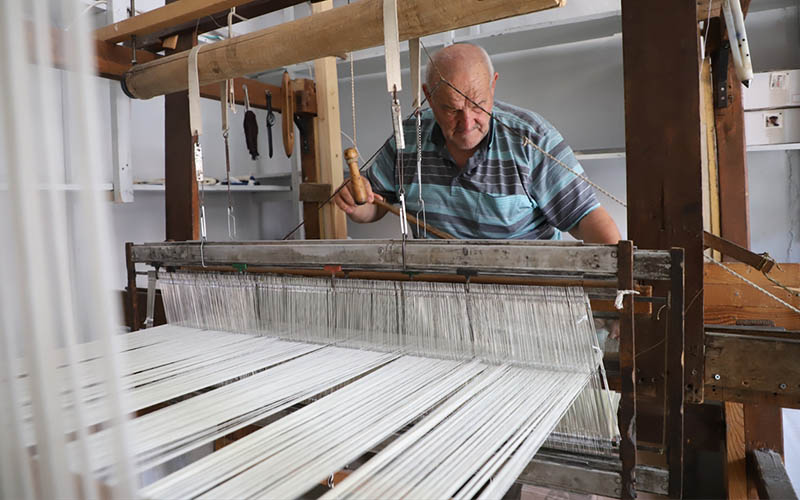
Turkish artisans continue to use intricate handloom methods passed down through generations. These patterns, knots, and weaving densities cannot be replicated by machines alone. -
Unique cultural identity
Every peshtemal carries motifs inspired by Anatolian culture. Global buyers seeking authenticity are naturally drawn to textiles that preserve this identity. -
Expert craftsmanship
Even in modern factories, production teams often come from families with weaving backgrounds. This human expertise ensures superior texture, finishing, and durability.
Brands wanting products with a story—and not just a function—often choose Turkish mills because heritage-driven quality resonates with global consumers.
2. Turkish Cotton: The Superior Raw Material Behind Every Peshtemal
At the core of Turkish peshtemal production lies one essential advantage: long-staple Turkish cotton.
What Makes Turkish Cotton So Special?
-
Long fibers = superior softness
Longer fibers allow smoother yarns, resulting in luxuriously soft towels that become even softer with use. -
High absorbency
Turkish cotton’s naturally porous structure makes peshtemals dry quickly while absorbing more water compared to standard cotton. -
Durability
The strength of long-staple cotton means peshtemals maintain shape and texture for years, even after repeated washing. -
Lightweight comfort
Unlike bulky towels, peshtemals remain lightweight and breathable—ideal for travel, spa use, beachwear, or wellness brands.
This raw material advantage is a primary reason global retailers position Turkish peshtemal products as premium textiles.
3. A Perfect Blend of Handloom Craftsmanship and Modern Machinery
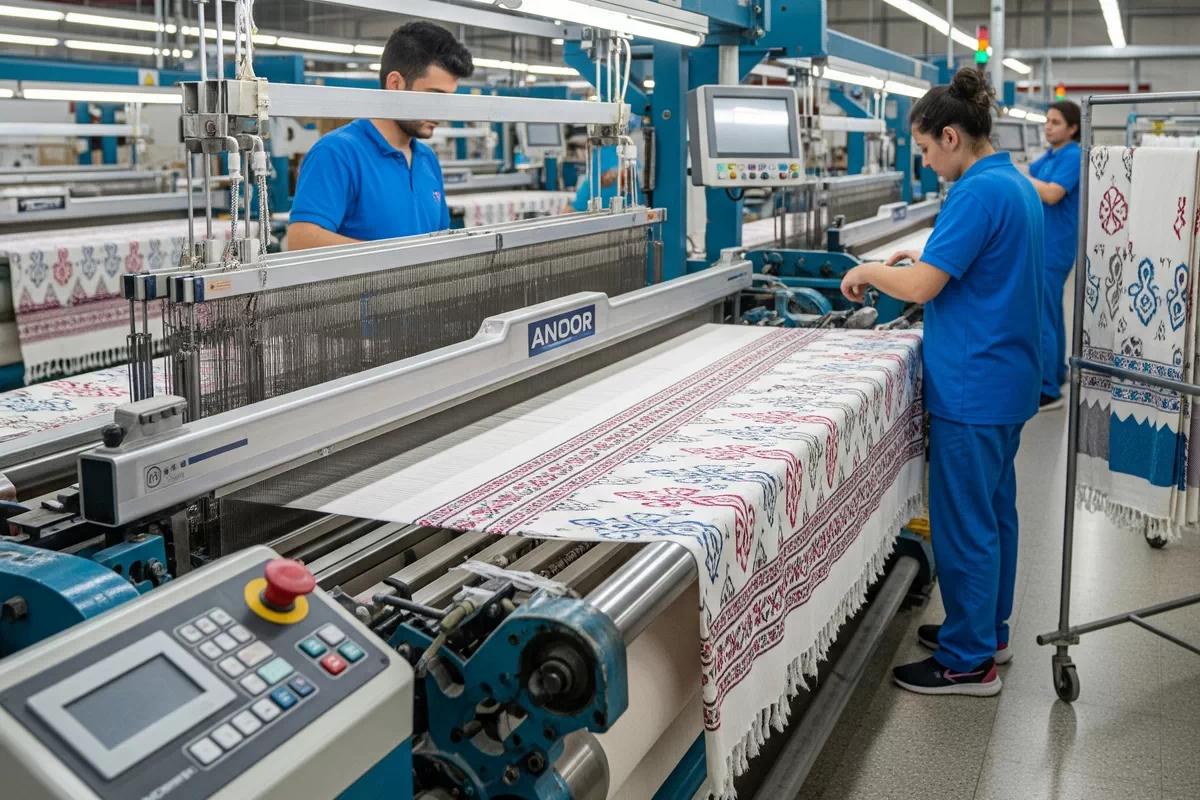
Turkish manufacturers have successfully merged ancient weaving craftsmanship with state-of-the-art manufacturing technology. This hybrid model gives them a competitive edge the rest of the world struggles to match.
How This Hybrid Production Model Works
-
Handlooms for artisanal collections
Boutique brands or luxury retailers prefer handwoven peshtemals for their unique textures and artisanal patterns. -
Automatic looms for large volumes
Industrial machines enable consistent quality and mass production—ideal for wholesale and private label clients. -
Custom finishing techniques
-
Stone washing
-
Enzyme washing
-
Soft-touch finishing
-
Pre-washed textures
Each finish enhances the towel’s appearance and feel.
-
-
Strict quality control
Turkish factories implement multi-stage quality inspections, including weaving density checks, colorfastness tests, and fiber integrity assessments.
This dual-production strength helps Turkish manufacturers support both boutique lifestyle brands and high-volume retailers simultaneously.

4. Private Label Expertise: Why Global Brands Prefer Turkish Manufacturers
One of the strongest reasons Turkish peshtemal manufacturers dominate international markets is their deep familiarity with private label production.
Many factories specialize in helping brands build their own identity, offering tailored services that simplify the entire process from concept to shipment.
What Private Label Services Do Turkish Manufacturers Offer?
-
Custom sizes (90×180, 100×200, or any required dimension)
-
Custom GSM (Fabric weight customization)
-
Color dyeing matching Pantone codes
-
Pattern development & jacquard design
-
Brand label, care label & barcode creation
-
Eco-friendly packaging production
-
Dropshipping & fulfillment support (optional)
This flexibility allows global brands to launch or expand their product lines effortlessly.
Why This Matters for B2B Buyers
Most new businesses prefer low-risk, flexible solutions. Turkish suppliers make it easy to start with small batches while scaling up smoothly as demand grows.
5. Flexible MOQ (Minimum Order Quantity): Ideal for New Brands
MOQ is one of the biggest challenges for small businesses in the textile industry. Manufacturers from other countries often demand thousands of units per design.
Turkish producers, however, offer far more flexible MOQ options, such as:
-
50 pcs per color
-
100 pcs per model
-
Even lower quantities for handloom collections
This flexibility allows new brands to enter the market without heavy inventory risk, making Turkey the go-to production hub for startup labels.
6. Fast Lead Times & Reliable Production Capacity
Turkish manufacturers are known for their fast and dependable lead times—a crucial advantage for brands operating seasonal or fast-moving markets.
Average Lead Times
-
In-stock wholesale orders: 3–7 days
-
Private label custom production: 2–4 weeks
-
Large-volume production: 4–6 weeks
Thanks to advanced machinery and well-organized supply chains, delays are rare.
Why Reliability Matters
Brands selling on platforms like Shopify, Amazon, or Etsy need consistent stock flow.
Unreliable production = lost sales.
Turkey’s reputation for dependable delivery timelines makes it one of the most trusted textile suppliers worldwide.
7. Strategic Location for Fast International Shipping
Turkey’s geographical location makes it a natural trade bridge between Europe, the Middle East, and North Africa. For global B2B buyers, this means:
-
Faster transit times
-
Lower shipping costs
-
Easier customs processes
-
Greater logistical efficiency
For example:
-
Shipping to Europe: 3–7 days
-
Shipping to the U.S.: 6–10 days
-
Shipping to the Middle East: 2–5 days
This logistical advantage strengthens Turkey’s position as the leading peshtemal export hub.
8. Eco-Friendly, Ethical & Certified Textile Production
Sustainability is no longer optional—it is a global requirement, especially for European and North American retailers.
Most Turkish peshtemal manufacturers follow international standards such as:
-
OEKO-TEX® certification
-
GOTS organic cotton certification
-
ISO quality standards
-
Compliance with European chemical safety regulations
What This Means for Buyers
-
Safe products with no harmful chemicals
-
Eco-friendly production you can confidently market
-
A transparent and traceable supply chain
-
Higher consumer trust for your brand
Sustainability efforts greatly contribute to the credibility and desirability of Turkish manufacturers in global markets.

9. Innovative Designs & Trend-Focused Collections
Turkish manufacturers are not just producers—they are innovators. Thanks to industry experience, market research, and design teams, they develop collections aligned with global trends such as:
-
Minimalist modern patterns
-
Soft pastel colors
-
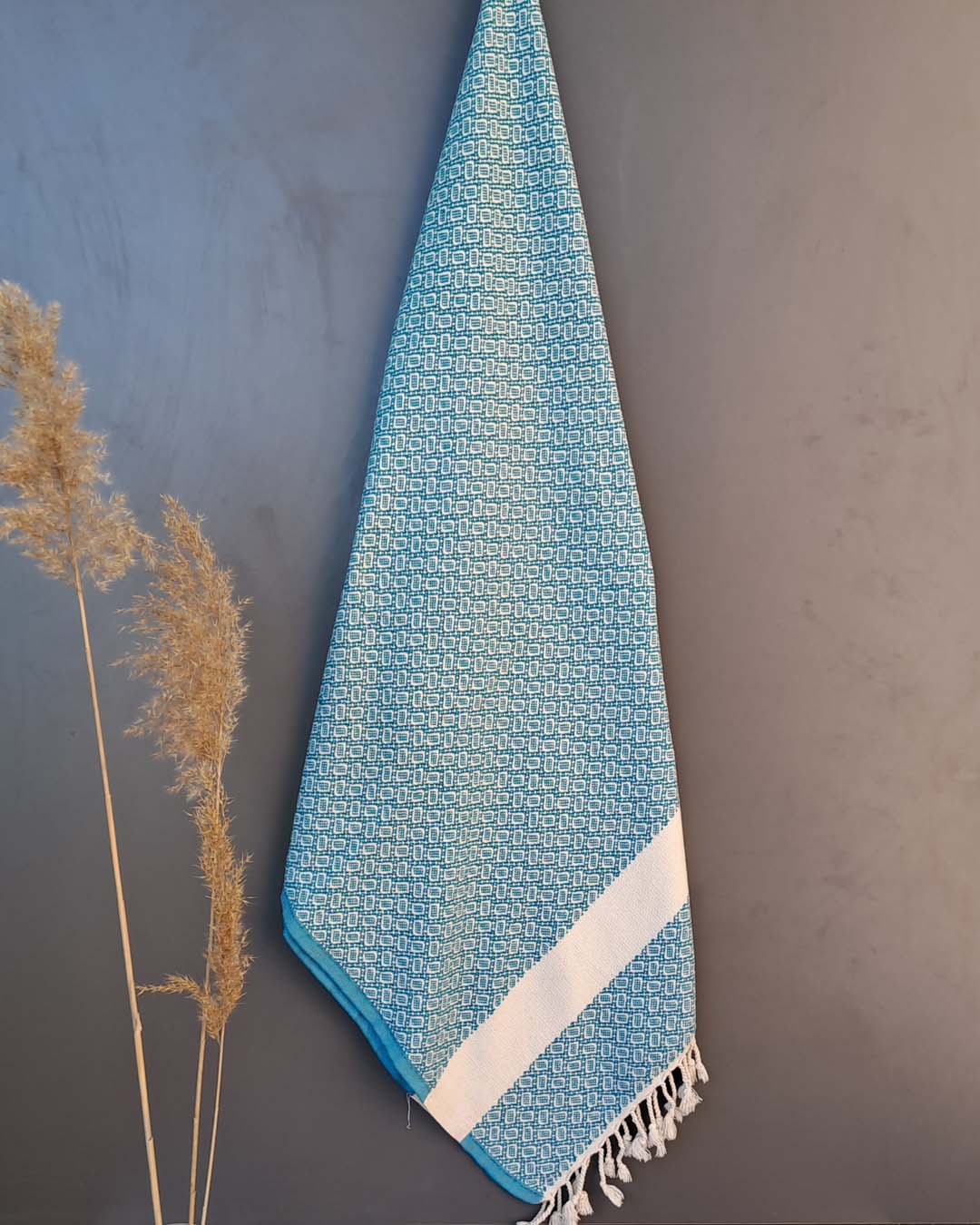
Geometric jacquard weaves
-
Boho and ethnic-inspired designs
-
Sustainable and organic fabrics
This creative adaptability keeps Turkish peshtemal exports competitive and fresh in the global marketplace.
10. Competitive Pricing Without Compromising Quality
Although Turkish peshtemals are considered premium products, their price-to-quality ratio is excellent.
This balance is achieved through:
-
Access to local cotton
-
High-volume production facilities
-
Efficient labor expertise
-
Optimized supply chains
-
Lower minimum quantities
As a result, brands can offer luxury-quality peshtemals at accessible retail prices—boosting profitability.
11. A Global Reputation for Quality & Trust
Turkish manufacturers have established long-term relationships with global retailers, boutique brands, hotels, spas, and wellness chains. This reputation strengthens every year thanks to:
-
Consistent product standards
-
Reliable communication
-
Professional business practices
-
Transparent production processes
-
Strong after-sales support
Their professionalism is a major contributor to Turkey’s leadership in the international peshtemal market.
Conclusion: Why Turkish Peshtemal Manufacturers Lead the Global Market
Dokuyorum Turkish peshtemal manufacturers dominate the global market due to a rare combination of strengths:
-
Centuries-old weaving craftsmanship
-
Premium long-staple Turkish cotton
-
Modern manufacturing infrastructure
-
Deep expertise in private label production
-
Flexible MOQ for new businesses
-
Fast lead times and reliable supply
-
Strategic export location
-
Eco-friendly and certified production
-
Competitive pricing
-
A global reputation for trust and quality
Whether you’re launching a new brand, expanding your product line, or sourcing reliable B2B suppliers, Turkish peshtemal manufacturers remain the best choice worldwide.