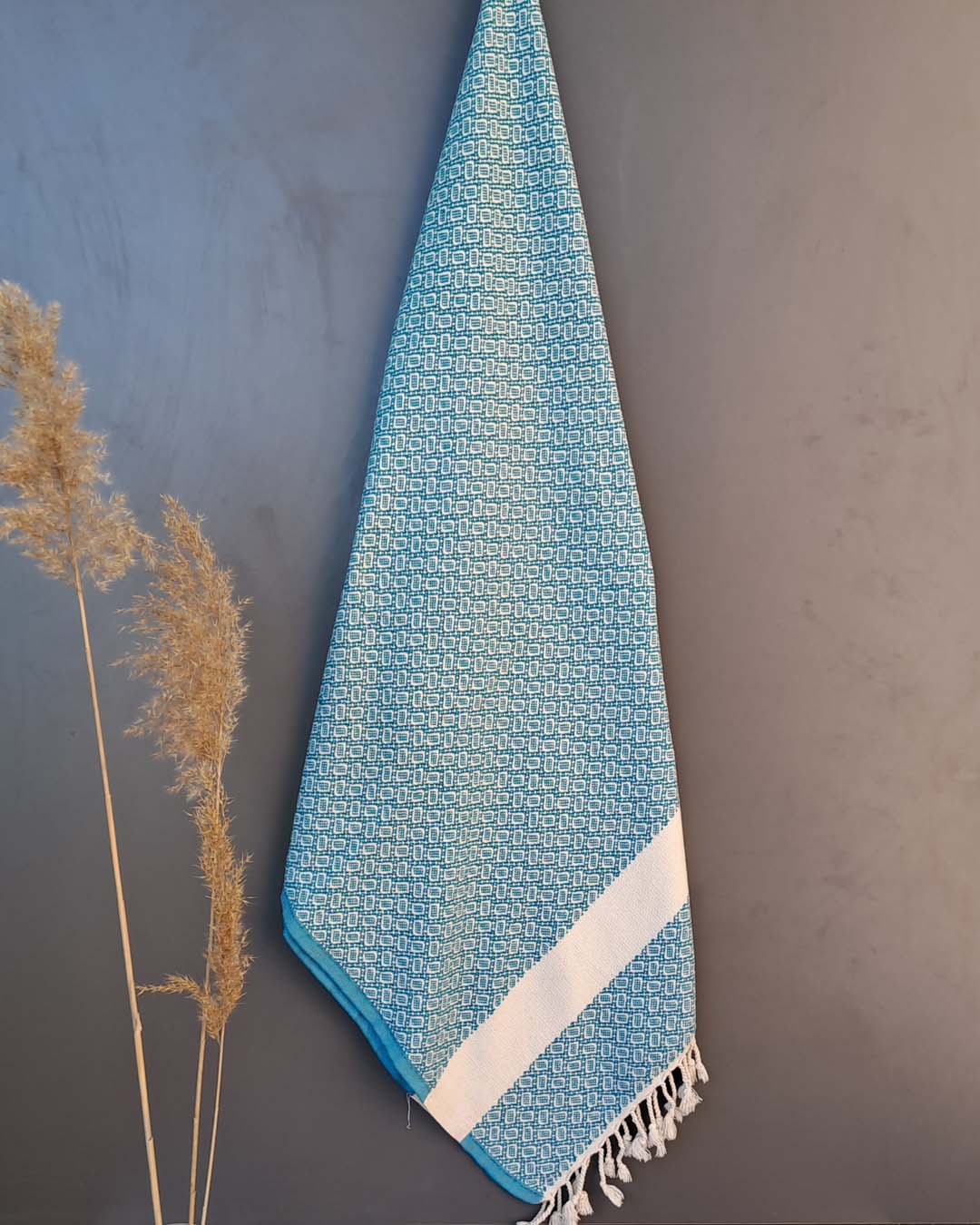
What Are Turkish Beach Towels Made Of?
Turkish beach towels, or peshtemals, are renowned for their luxurious feel, exceptional absorbency, and remarkable durability. But what truly sets them apart is the quality of the materials used in their production. At Dokuyorum, we carefully select the finest materials to ensure our towels meet the highest standards of comfort, functionality, and sustainability.
1. Premium Turkish Cotton
The cornerstone of a high-quality Turkish towel is Turkish cotton. Known for its extra-long fibers, Turkish cotton offers superior strength and softness. These long fibers allow for fewer joins during weaving, resulting in a smoother and more durable fabric. Over time, the towels become even softer and more absorbent, making them a long-lasting companion for your beach trips, baths, and beyond.
2. Natural and Sustainable Fibers
At Dokuyorum, we prioritize sustainability. Many of our towels incorporate organic cotton, which is free from pesticides and harmful chemicals. This not only ensures a gentle touch on your skin but also supports environmentally conscious practices. Some peshtemals also blend bamboo or linen fibers, adding a unique texture and increasing their breathability.
3. Eco-Friendly Dyes
The vibrant colors and intricate patterns of Turkish towels are achieved using eco-friendly, non-toxic dyes. These dyes ensure that the towels are safe for all skin types, even for those with sensitivities. Moreover, they are resistant to fading, ensuring your towel remains vibrant after repeated washes.
4. Traditional Craftsmanship Meets Modern Innovation
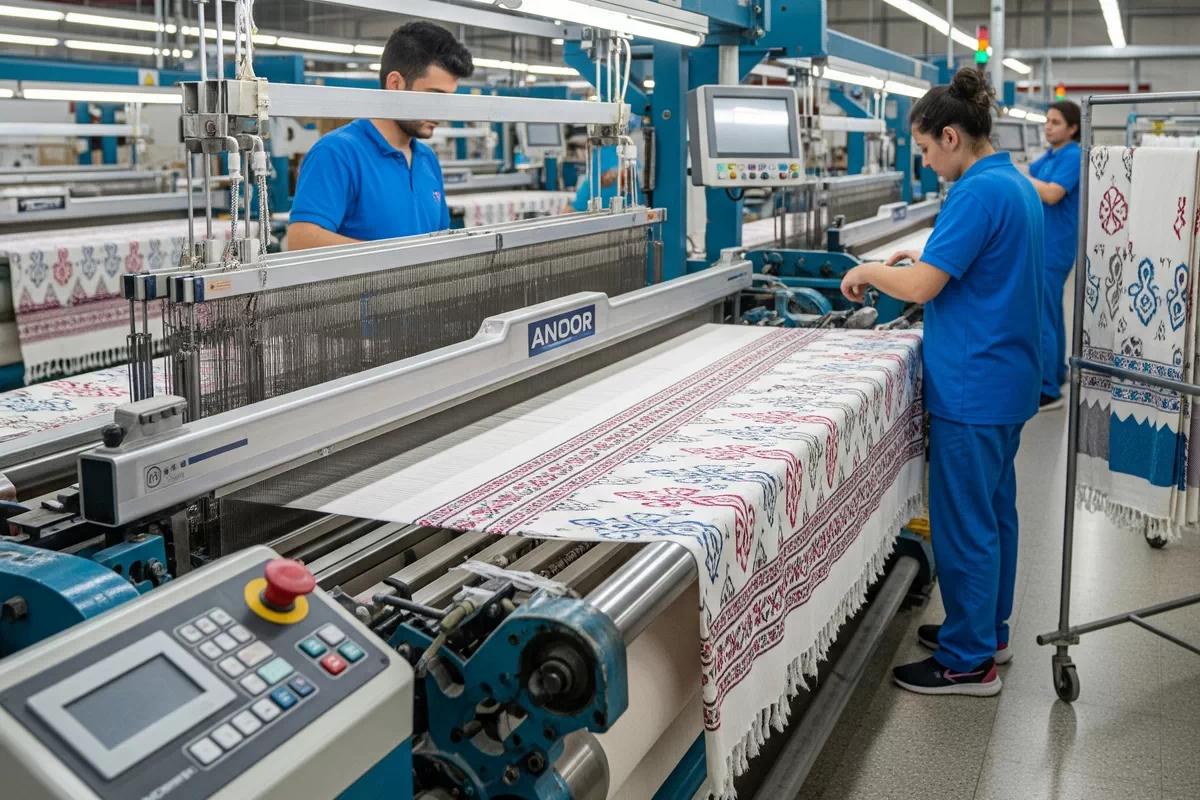
Each Turkish towel produced at Dokuyorum reflects the rich heritage of Turkish weaving techniques, combined with innovative practices. Many of our towels are hand-loomed by skilled artisans, ensuring an authentic touch, while others are produced on advanced looms for precision and efficiency.
By choosing Dokuyorum, you’re not just selecting a towel—you’re investing in a piece of Turkish culture crafted with care and integrity. Whether it’s the softness of the cotton, the sustainability of the fibers, or the vibrancy of the colors, every element of our towels is thoughtfully chosen to enhance your experience.
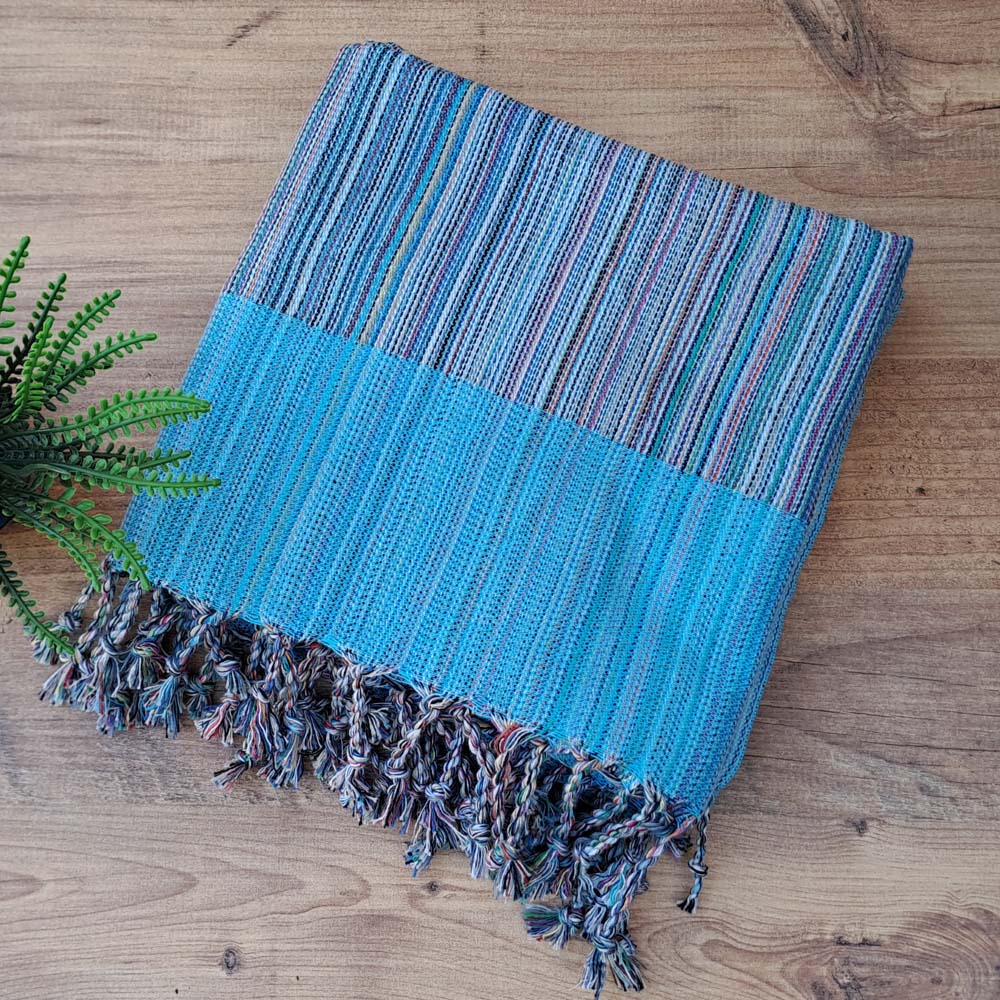
How Are Turkish Beach Towels (peshtemal) Produced?
Although peshtemal production may seem like “simple weaving,” what determines quality is the consistency of raw material selection, yarn characteristics, weaving plan, finishing, and final processes. The following steps clearly show how peshtemal is produced, from raw cotton to the final product.
1) Raw material selection and specification creation (Cotton/blend)
Purpose: To determine the balance of absorbency, softness, durability, and quick drying from the outset.
How it’s done: The cotton type and yarn target are selected according to the product usage scenario (beach, spa, travel, promotion). If desired, a blend with fibers such as bamboo/linen is planned.
Parameters that determine quality:
- Fiber length and cleanliness (smoothness and durability of the fabric)
- Blend ratio (feel, drying speed, creasing behavior)
- Target weight and weaving density (lightness–performance balance)Common mistake / expert tip: The “one fabric for all” approach reduces quality. While lightness + quick drying are priorities for beach-focused peshtemals, more durability may be preferred for bath/spa use.
2) Fiber preparation (Cleaning + combing)
Purpose: To remove foreign matter from the fibers and make them suitable for yarn production.
How it’s done: Cotton goes through a cleaning stage; then, through combing, the fibers are separated and aligned.
Parameters determining quality:
- Level of cleanliness (remaining burrs/debris cause pilling in the fabric)
- Fiber alignment (yarn regularity)Common mistake / expert tip: Insufficient combing increases breakage during weaving. This results in a “wavy surface” and “irregular texture” in the product.
3) Yarn production (Twist – yarn character)
Purpose: To create the yarn, which is the “building block” that determines the texture, absorbency, and durability of the terry cloth.
How it’s done: The prepared fiber is twisted according to the desired yarn structure (the amount of twist changes the yarn’s behavior).
Parameters that determine quality:
- Twist level (high twist: sturdier/stronger; low twist: softer/more absorbent but delicate)
- Yarn irregularity (thick–thin areas appear as “shadows” on the fabric)Common mistake / expert tip: If the target is excessively soft and the twist is reduced too much, fraying at the ends and pilling on the surface may increase. A balance between ‘softness’ and “sturdiness” is essential.
4) Warp preparation (Preparation for the loom)
Purpose: To transfer the warp yarns, which form the skeleton of the weave, to the loom with the correct tension.
How it is done: The warp yarns are wound onto beams, the tension is adjusted, and the heddles (comb/warp arrangement) are set according to the weaving plan.
Parameters determining quality:
- Warp tension (too tight: breakage; too loose: wavy fabric)
- Rack accuracy (pattern/edge straightness)Common mistake / expert tip: If the warp tension is inconsistent, “crooked lines” and “shrinkage” at the edges will appear on the peshtemal.
5) Weaving (hand loom or modern loom)
Purpose: To produce the fabric that forms the surface, pattern, and performance of the peştemal.
How it is done: The weft threads are passed through the warp threads to weave the specified weave structure and pattern.
Parameters determining quality:
- Weaving density (very dense: more compact/less air permeability; less dense: lighter/dries faster)
- Edge regularity (selvedge/edge quality)
- Pattern shift (critical, especially in striped/patterned products)Common mistake/expert tip: “Just weave tightly to improve quality” is not correct. Excessively tight weaving in beach peshtemals can reduce the quick-drying advantage. Usage scenario = weave density.
6) Dyeing and patterning (Color/fastness)
Objective: To set colors and reduce the risk of fading during washing; to enhance pattern aesthetics.
How it’s done: The fabric is dyed according to the design, or yarn dyeing/pattern techniques are applied; this is followed by rinsing and fixing processes.
Parameters determining quality:
- Color consistency (tone difference between batches)
- Risk of color bleeding during washing (first wash performance)Common mistake / expert tip: If rinsing/fixing after dyeing is not done properly, the user will perceive that the color “bled during the first wash.” This directly increases the risk of returns.
7) Finishing (Washing, softening, shrinkage control)
Purpose: To reveal the towel’s true “feel” and performance: softness, absorbency, dimensional stability.
How it’s done: The fabric is washed, softening/finishing processes are applied if necessary; drying and dimensional control are performed.
Parameters that determine quality:
- Shrinkage (dimensional stability)
- Absorbency development (some fabrics gain performance after the first wash)Common mistake / expert tip: If the finishing process is rushed, the fabric may remain “stiff.” The user may interpret this as “poor quality”; however, with proper finishing, the product “settles.”
8) Finishing processes (Fringe twisting/edge stitching)
Purpose: To complete the signature details that make the peshtemal a peshtemal and reduce the risk of unraveling.
How it’s done: The fringes are twisted/knotted; the edges are cleaned (stitching/overlocking, etc.).
Parameters determining quality:
- Fringe strength (resistance to unraveling)
- Edge smoothness (waviness/warp slippage)Common mistake / expert tip: If the fringes are not tied securely enough, the product will feel “worn out after first use.” Fringe quality is surprisingly decisive in customer satisfaction.
9) Quality control (Standardization)
Purpose: Consistency in mass production; ensuring individual products meet the same standard.
How it’s done: Checks are performed for measurements, stitching/fringes, surface defects, pattern misalignment, and color differences; defective items are separated.
Parameters that determine quality:
- Measurement tolerance
- Tone difference and pattern alignment
- Yarn breakage/weaving errorCommon mistake/expert tip: The “visual inspection is sufficient” approach leads to minor defects reaching the customer. Alignment control is essential, especially for striped/patterned peshtemals.
10) Packaging and preparation for shipment (Product protection)
Purpose: To deliver the product to the customer clean, neat, and undamaged; to strengthen brand perception.
How it is done: Folding standards are applied, labeling is done, and the product is prepared for shipment with protective packaging.
Parameters that determine quality:
- Packaging hygiene and risk of crushing/staining
- Accuracy of label information (size, content, care instructions)Common mistake / expert tip: Even if the product is very good, poor packaging creates the perception of a “cheap product.” First impressions are formed here.
The 5 Parameters That Most Affect Quality
Whether a terry cloth towel is “good” or ‘average’ is often determined not by the brand name, but by a few critical settings in production. When the following 5 parameters are managed correctly, the towel absorbs better, dries faster, lasts longer, and leaves a “premium” feel in the hand.
1) Yarn quality and twist balance
- What does it affect? Softness, pilling, durability, absorbency.
- Good result: Balanced twist → both soft and strong texture.
- Red flag: Very low twist → excessive pilling/shedding; very high twist → stiffness and low absorbency feel.
2) Weave density and structure
- What does it affect? Lightness, drying speed, firmness, breathability.
- Good result: Density suitable for the usage scenario (priority on fast drying if beach-focused).
- Red flag: “The denser, the better” logic → heaviness and slow drying.
3) Finishing (washing/treatment) quality
- What does it affect? Initial feel, shrinkage, opening of absorbency.
- Good result: Product with stable dimensions, consistent softness, high absorbency.
- Red flag: Rushed finishing → stiff feel, dimensional deviation, “poor quality” perception by the customer.
4) Dyeing & color stability (shade variation, fading, bleeding)
- What does it affect? Appearance, vibrancy after repeated washing, return rate.
- Good result: Consistent shade from batch to batch, minimal color loss in the first wash.
- Red flag: Insufficient rinsing/fixing → complaints of “color bleeding in the first wash.”
5) Finishing processes: fringe, edge, and seam cleanliness
- What does it affect? Product lifespan and “craftsmanship feel.”
- Good result: Fringes are secure, edges are even, no waviness.
- Red flag: Fringe unraveling, edge puckering, loose threads → product looks worn out even when new.

What Material Is Best for Beach Towels?
Selecting the right material for beach towels is crucial for ensuring comfort, durability, and performance. At Dokuyorum, we believe that Turkish cotton reigns supreme when it comes to crafting the perfect beach towel. Let’s explore why this material is the ideal choice and how it compares to other commonly used fabrics.
1. Turkish Cotton: The Ultimate Choice
Turkish cotton is renowned for its extra-long fibers, which result in a smoother and softer fabric. This unique characteristic also enhances the towel’s durability, making it resistant to wear and tear. Here’s why it’s perfect for beach towels:
- Highly Absorbent: Turkish cotton can absorb large amounts of water without becoming overly heavy.
- Quick-Drying: Its lightweight nature allows it to dry faster than traditional towels, making it ideal for beach use.
- Soft and Luxurious: The fabric becomes softer with every wash, providing a premium experience over time.
- Compact and Travel-Friendly: Turkish towels are thinner and easier to fold, saving valuable space in your beach bag.
At Dokuyorum, we source premium Turkish cotton to ensure our beach towels deliver both functionality and luxury.
2. Comparing Other Materials
While Turkish cotton leads the pack, other materials like Egyptian cotton, microfiber, and bamboo have their own merits. Here’s how they stack up:
- Turkish Cotton: Known for its plush texture, Turkish cotton is highly absorbent but tends to be thicker and slower to dry, making it less convenient for beach settings.
- Microfiber: Lightweight and quick-drying, microfiber towels are practical but lack the natural softness and breathability of cotton.
- Bamboo: Bamboo blends offer a silky texture and antibacterial properties but may not match Turkish cotton in durability and absorbency.
3. Sustainability Matters
In addition to performance, sustainability is a critical factor. Turkish cotton stands out not only for its quality but also for its eco-friendly production methods. At Dokuyorum, we prioritize sourcing organic cotton and using non-toxic dyes, ensuring that our beach towels are safe for you and kind to the planet.
4. Why Choose Turkish Cotton Beach Towels from Dokuyorum?
When you choose a Turkish cotton towel from Dokuyorum, you’re investing in:
- Authenticity: Handcrafted with care, our towels preserve the rich tradition of Turkish weaving.
- Versatility: Ideal for lounging on the sand, drying off after a swim, or doubling as a stylish sarong.
- Longevity: Designed to last, our towels retain their quality through countless uses and washes.
For beach towels that offer unparalleled absorbency, quick-drying properties, and luxurious comfort, Turkish cotton is the clear winner. At Dokuyorum, we take this premium material and elevate it with thoughtful craftsmanship and sustainable practices. Whether you’re heading to the beach or looking for a versatile travel companion, our towels provide the perfect balance of style and functionality.
Quick Checklist for Buying a Peshtemal: 7 Signs
When you pick it up in the store or examine the product page while shopping online, here are 7 practical signs that will help you quickly understand the quality of the peshtemal:
1) Weight–thinness balance (the “fullness” feeling in your hand)
- Good sign: Feels “full” without being too thick; not excessively loose or spongy.
- Red flag: Excessively thin and “sparse” feel → risk of low durability and loss of shape.
2) Is the weave surface regular? (visual check)
- Good sign: Lines/patterns are straight; surface is homogeneous.
- Red flag: Rippling, thread pull-outs, pattern misalignment.
3) Are the edges even? (Is there shrinkage/rippling?)
- Good sign: Edges are straight and cleanly finished, stitching line is even.
- Red flag: Waves/shrinkage at the edge → warp tension and finishing quality may be poor.
4) Are the fringes secure? (twist/knot quality)
- Good sign: Fringes are consistent in length; twist/knots are tight and clean.
- Red flag: Looseness in fringe, irregular twist, easy unraveling.
5) Set the right expectations for absorbency (how does the peshtemal behave when first used?)
- Good sign: The peshtemal is not “fluffy like a towel”; absorbency settles with proper care.
- Red flag: The product page claims “maximum absorbency from day one” but provides no care/treatment information.
6) Color/dye reliability (especially in dark tones)
- Good sign: The product page provides clear care recommendations regarding “color fastness/dye bleeding.”
- Red flag: Vague descriptions + very vivid dark tones → risk of color bleeding in the first wash.
7) Is there technical information on the product page? (sign of reliability)
- Good sign: Measurements, content, care instructions, production method (hand-woven/machine-woven), and usage recommendations are clearly written.
- Red flag: Only marketing phrases are present; no details on measurements/care/workmanship.
Quick decision statement: A “good peshtemal” is not just soft; it is well-woven, well-finished, and has sturdy fringes/edges.
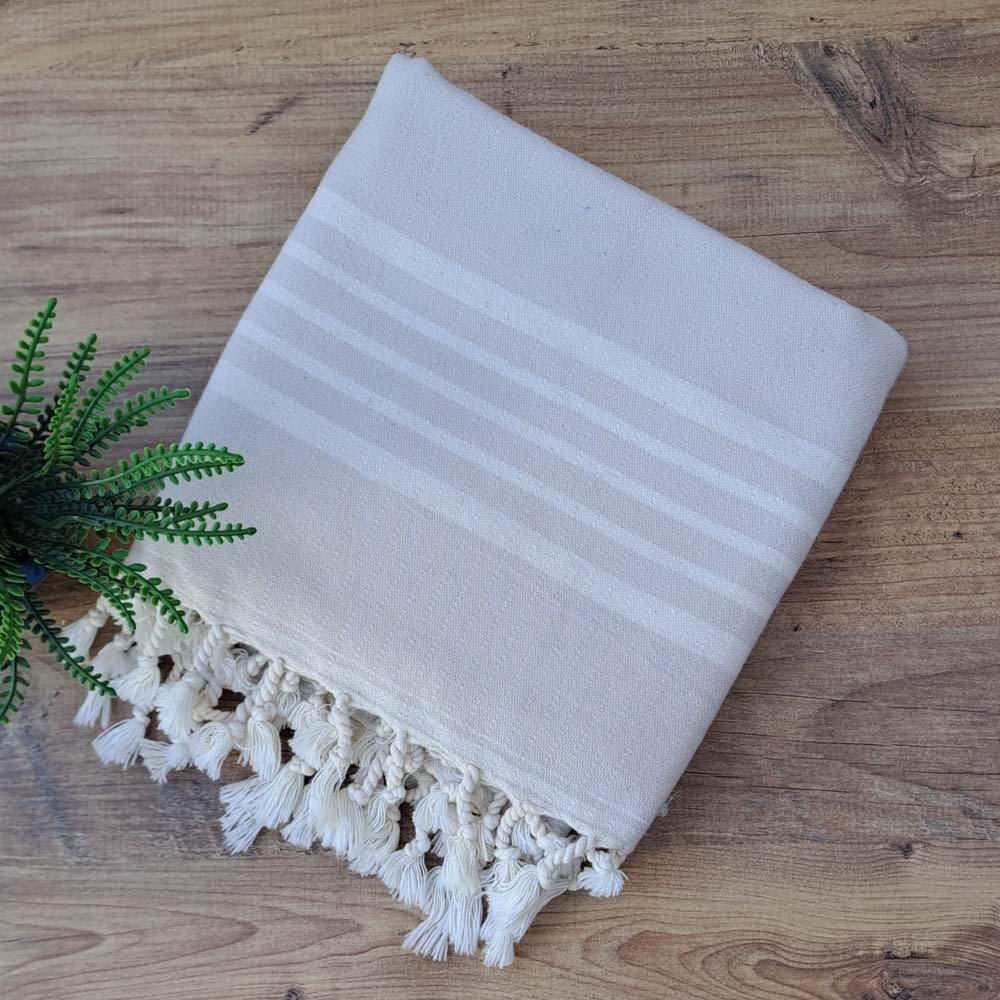
The History and Cultural Significance of Turkish Towels
Turkish towels, or peshtemals, are not just practical household items; they are deeply rooted in the history and culture of Anatolia, dating back over 500 years. Their story begins in the Ottoman Empire, where they were first introduced in Turkish hammams (bathhouses). These towels were valued for their lightweight design and excellent absorbency, making them an essential part of the hammam experience. At Dokuyorum, we honor this legacy by preserving traditional weaving techniques while adapting to modern needs.
1. Origins in the Ottoman Empire
Turkish towels were originally woven in small villages across Anatolia, using handlooms operated by skilled artisans. These towels were not just utilitarian items; they held symbolic value, often given as gifts to mark special occasions such as weddings or the birth of a child. The intricate patterns and vibrant colors of peshtemals often reflected local traditions and the weaver’s creativity, making each towel a unique work of art.
2. Role in Turkish Hammams
The hammam, or Turkish bath, played a central role in Ottoman society, serving as a place for relaxation, cleansing, and social interaction. Peshtemals became a staple in these baths due to their thin, lightweight design, which made them easy to wrap around the body while providing excellent moisture absorption. Their cultural significance grew as they became symbols of luxury and refinement.
3. Evolution into a Global Icon
Over the centuries, Turkish towels evolved from being a local tradition to a global phenomenon. Today, they are cherished worldwide for their versatility and aesthetic appeal. Used not only as towels but also as scarves, sarongs, and home decor, peshtemals have found their way into modern lifestyles while retaining their traditional charm.
4. Preserving Tradition at Dokuyorum
At Dokuyorum, we embrace the historical significance of Turkish towels by combining age-old craftsmanship with contemporary designs. Our artisans continue to use traditional weaving techniques, ensuring that each towel is a testament to the heritage of Turkish textiles. Additionally, we incorporate sustainable practices to honor both the craft and the environment.
5. A Symbol of Turkish Identity
Turkish towels are more than functional items; they represent a cultural identity steeped in artistry, innovation, and community. By choosing a peshtemal, you’re not just selecting a towel—you’re connecting with centuries of tradition and craftsmanship that define the Anatolian spirit.
Turkish towels have transcended time and geography, becoming symbols of elegance and practicality. Their rich history and cultural importance are woven into every thread, making them a unique addition to any home. At Dokuyorum, we are proud to continue this legacy, crafting towels that honor the past while embracing the future.
Why Dokuyorum Stands Out in the World of Turkish Towels
In the vast world of Turkish towels, where tradition and craftsmanship reign supreme, Dokuyorum has emerged as a leading brand that redefines quality, sustainability, and innovation. Our commitment to excellence stems from a deep respect for the heritage of Turkish textiles and a forward-looking vision to meet modern customer expectations. Here’s why Dokuyorum is the preferred choice for those seeking the best Turkish towels.
1. Heritage Meets Innovation
At Dokuyorum, we combine the timeless craftsmanship of Anatolian weaving with cutting-edge technology. Our artisans preserve the centuries-old traditions of Turkish towel production, ensuring every peshtemal tells a story of culture and authenticity. Simultaneously, we incorporate modern techniques to enhance durability, absorbency, and design precision, making our towels perfect for today’s diverse lifestyles.
2. Superior Material Selection
Our Turkish towels are crafted from 100% premium Turkish cotton, celebrated worldwide for its extra-long fibers. These fibers create towels that are:
- Softer and stronger than conventional options.
- Highly absorbent yet lightweight.
- Long-lasting, becoming even softer and more efficient with every wash.
By sourcing only the finest materials, we ensure every Dokuyorum product meets the highest standards of quality.
3. Sustainability at Our Core
We believe in creating products that are as kind to the planet as they are to your skin. At Dokuyorum, we:
- Use eco-friendly, non-toxic dyes, ensuring vibrant colors without harming the environment.
- Employ sustainable production practices that minimize waste and reduce our carbon footprint.
- Offer organic cotton options, supporting environmentally conscious consumers.
Choosing Dokuyorum means investing in a brand that prioritizes the well-being of the planet and future generations.
4. A Wide Range of Designs
From traditional patterns inspired by Ottoman artistry to sleek, contemporary styles, Dokuyorum offers a diverse collection of towels to suit every taste. Whether you’re looking for a classic hammam towel or a vibrant beach essential, we have something for everyone. Customization options allow you to add a personal touch, making our towels perfect for gifts, promotions, or special occasions.
5. Unmatched Customer Experience
At Dokuyorum, our customers are at the heart of everything we do. We ensure:
- Rigorous Quality Control: Every towel is inspected to meet our strict quality standards.
- Global Accessibility: We ship worldwide with reliable and efficient delivery services.
- Personalized Support: Our team is always ready to assist with tailored solutions and prompt responses.
6. Supporting Local Artisans
By choosing Dokuyorum, you’re also supporting the local artisan community. Many of our towels are handwoven by skilled craftsmen and women in Anatolia, preserving traditional techniques and providing sustainable livelihoods.
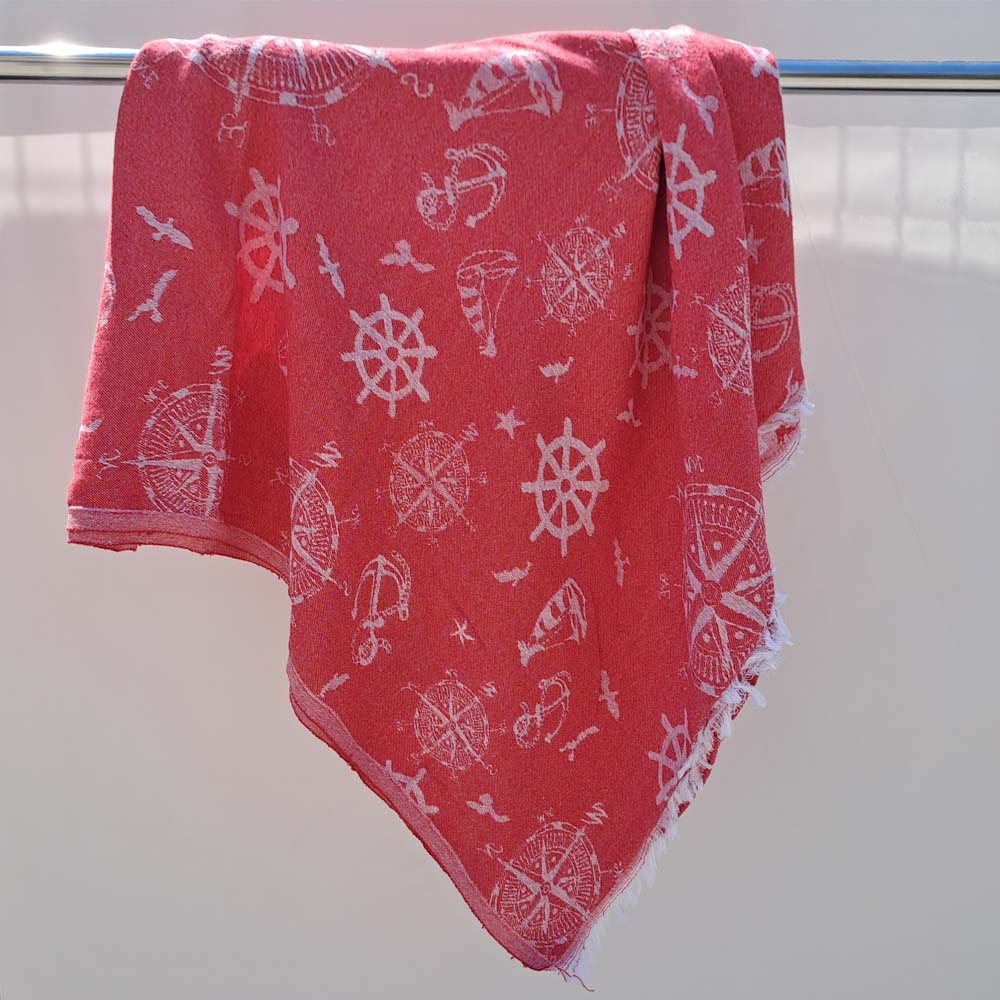
Traditional Turkish Beach Towel Manufacturer
What makes Dokuyorum stand out is our unwavering dedication to blending tradition with innovation, quality with sustainability, and style with practicality. Our Turkish towels are more than just products—they are a celebration of culture, craftsmanship, and care. Whether you’re lounging at the beach, stepping out of a spa, or adding a touch of elegance to your home, Dokuyorum is your trusted partner in luxury and comfort.
Choose Dokuyorum, and experience the difference of authentic Turkish towels, made with passion and precision. Dokuyorum We Are Weavers